14 July 2026
Reflect, Refocus and Realign

Published by Amanda Anderson
As another academic year draws to a close, many school leaders find themselves caught between reflection and fatigue — the final push before a much-needed break. The to-do lists grow longer, the days stretch out, and yet there’s an unspoken invitation in this time: to pause, look back, and ask one simple but powerful question.
Have I spent my time doing the right things?
In the rush of school life, it’s easy to focus on urgency rather than impact. But the end of the year offers a valuable opportunity to step back, recalibrate, and set clearer priorities for the months ahead.
The 80:20 Reality Check
The Pareto Principle — or 80:20 rule — is a simple but powerful reminder that 80% of our results often come from 20% of our efforts.
When applied to school leadership, it prompts honest reflection:
- Which 20% of your work has truly made the biggest difference this year?
- Where have you invested time that hasn’t delivered the outcomes you hoped for?
- What activities energised you — and which drained your focus and wellbeing?
This reflection isn’t about self-criticism; it’s about clarity. By identifying your personal 20%, you can protect what matters most and release the rest.
For some, that 20% might be time spent coaching staff, leading curriculum development, or building strong pastoral systems. For others, it might be developing middle leaders or strengthening communication with parents. Whatever it looks like, your greatest leadership impact usually sits in that small, intentional space.
Reflecting on the Year That’s Been
Before the summer break, take ten minutes to ask yourself:
- Where has my time gone this year?
Look at your diary or to-do lists. Which weeks felt purposeful, and which felt reactive? - What gave me energy — and what depleted it?
Time spent on high-impact tasks tends to energise us; low-value busywork drains us. - What have I learned about my leadership rhythm?
When were you most focused, balanced, and clear-headed? When did things start to slip? - Have I modelled healthy boundaries for my team?
Your actions around workload, communication, and self-care set the tone for others.
This isn’t about perfection — it’s about progress. Small shifts in awareness can make a huge difference next year.
Leadership and Looking After You
Time management and prioritisation are not just professional skills; they’re protective factors for wellbeing.
When you manage your time with purpose, you protect your energy.
When you set boundaries, you give others permission to do the same.
When you pause to reflect, you lead by example.
If this year has felt relentless, you’re not alone. But remember: your effectiveness as a leader comes not from how many hours you work, but from how intentionally you use them.
Setting Intentions for the Year Ahead
As you look toward September, use these questions to shape your priorities and restore focus:
- What will I stop doing?
Identify one recurring task or habit that drains time without meaningful impact. - What will I start doing?
Consider one new practice that supports clarity or wellbeing — perhaps a weekly reflection slot or a clear “Top 3” focus each Monday. - What will I continue doing?
Protect what works — your 20%. These are the habits that create calm, confidence, and progress.
You might even create a personal Leadership Focus Statement for next year — one sentence that sums up how you intend to lead your time and energy more intentionally.
“This year, I will focus on leading with clarity, protecting time for people, and creating space to think.”
Lessons from My Leadership Journey
When I was a deputy headteacher, I often ended the summer term feeling like I’d been sprinting a marathon — proud, but drained. It wasn’t until I began to track how I spent my time that I realised how much of it was reactive.
The difference came when I started each term with clarity — naming my three priorities and aligning my calendar around them. It didn’t make the work disappear, but it made it more purposeful. The 80:20 rule became a quiet reminder that leadership isn’t about doing everything; it’s about doing the right things well.
Final Thoughts
As the year closes, take a deep breath. Reflect on what’s worked, release what hasn’t, and carry forward the lessons that will help you thrive next year.
Leadership is a long game. It’s built not on intensity, but on rhythm — cycles of reflection, focus, and renewal.
So before the next term begins, give yourself permission to pause.
Ask yourself: Am I spending my time where it matters most?
And if not — what will I do differently next year to protect my time, my focus, and myself?
Ready to Start Next Year with Focus?
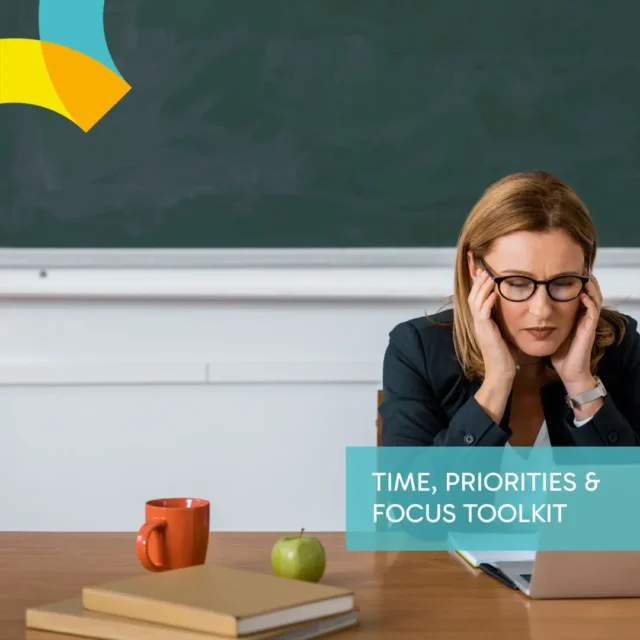
Our Time, Priorities & Focus Toolkit for School Leaders offers practical strategies to help you plan, prioritise, and protect your wellbeing through every term.
Explore our resources or connect with us to discuss tailored leadership coaching that supports balance, focus, and growth.