06 May 2026
Cognitive Overlap

Published by Amanda Anderson
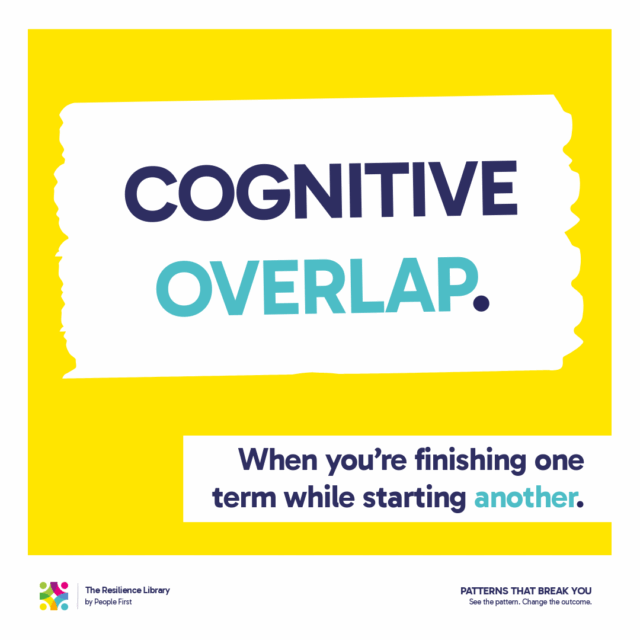
This article explores how cognitive overlap develops as schools approach half term, and why holding multiple timelines at once reduces clarity and increases pressure. As the term progresses towards half term, a particular type of pressure begins to emerge. It is not always visible in workload, but it is strongly felt in thinking.
Staff are still operating within the current term, managing lessons, decisions and daily responsibilities. At the same time, attention begins to shift forward. Planning for the next phase starts to form. Conversations about future priorities increase. Both timelines begin to exist at once. This is cognitive overlap.
A teacher may be delivering lessons while mentally adjusting plans for after half term. A leader may be resolving current issues while simultaneously mapping out next steps for improvement or change. Nothing is necessarily excessive on its own. The pressure comes from holding both at the same time. When cognitive overlap increases, thinking space reduces. Decisions feel heavier. Clarity becomes harder to access. People describe feeling “full” before the day has even finished. This is not a failure of organisation. It is a natural response to overlapping demands without clear boundaries.
Resilient systems recognise that thinking has limits. They do not expect people to hold multiple timelines indefinitely. Instead, they create clearer separation between what is now and what is next. This might involve staging planning more deliberately, naming when something will be picked up rather than holding it continuously, or creating protected time specifically for forward thinking. Without these boundaries, everything sits in the mind at once.
One small shift:
When a future task or idea comes to mind, write it down and assign it a time. Then return your attention fully to what you are currently doing. Clarity is not created by holding more. It is created by holding things at the right time.