18 November 2025
The Value-Effort Matrix


Published by Amanda Anderson
In school leadership, effort is often mistaken for impact. Many leaders work tirelessly, but not every hour spent leads to meaningful results. The real skill lies in recognising where to invest your time for the biggest return.
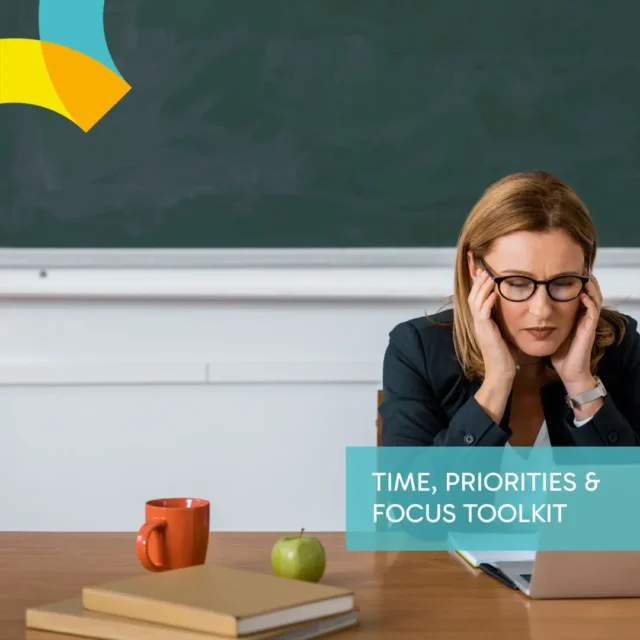
The Value vs Effort Matrix, part of our Time, Priorities & Focus Toolkit for School Leaders, helps leaders and teams evaluate their work through a clearer lens. It’s not about doing less — it’s about ensuring that what you do has purpose and impact.
Understanding the Value vs Effort Matrix
The matrix helps you analyse tasks, projects, or initiatives by plotting them against two axes — Value (Impact) and Effort (Workload). It divides your work into four quadrants:
- Quick Wins (High Value / Low Effort) – Small changes with big results
- Strategic Projects (High Value / High Effort) – Long-term, high-impact initiatives
- Low Value Tasks (Low Value / Low Effort) – Routine actions that add minimal benefit
- Reassess or Drop (Low Value / High Effort) – Time-consuming tasks that deliver little in return
The aim is to spend more time in the high-value quadrants — and to courageously let go of work that doesn’t serve your goals or your school’s priorities.
A School Leader’s Story: From Busywork to Big Wins
When I was a deputy headteacher, I prided myself on being busy. My diary was always full, and my to-do list seemed endless. But one afternoon, during a leadership coaching session, my coach asked me a simple question: “How much of your time this week has actually made a difference?”
It stopped me in my tracks.
That evening, I used the Value vs Effort Matrix to review my week. I realised that some of the tasks that had taken hours — lengthy data formatting, meetings without outcomes, and duplicating paperwork — added very little value. Meanwhile, the short, focused actions — supporting a middle leader with feedback or simplifying a process — created noticeable improvement.
Over time, this reflection reshaped how I approached work. I began asking myself and my team: “Is this worth the effort?” That question became one of the most powerful tools for improving both our productivity and our wellbeing.
Common Pitfalls to Watch Out For
- Equating busyness with impact – Long hours don’t always equal progress. Focus on outcomes, not activity.
- Neglecting quick wins – Small changes, consistently applied, often deliver the greatest return.
- Avoiding difficult conversations – Sometimes, reassessing a low-value task means challenging old habits or systems. Approach this collaboratively, not critically.
The key is curiosity. Instead of judging tasks as good or bad, ask what they contribute — and whether they’re still fit for purpose.
Lessons from My Leadership Journey
When we began using this tool as a leadership team, we started each term with a “value audit.” We listed our current projects, plotted them on the matrix, and asked one question: “Where is our time best spent?”
It helped us make smarter, braver decisions. We identified initiatives that no longer served the school’s direction and redirected that time toward mentoring, curriculum development, and wellbeing work. Staff felt the difference almost immediately — not because we did more, but because we did what mattered.
Putting It into Practice in Your School
- Start with one area – Try applying the matrix to your current improvement plan or workload review.
- Be honest – Some low-value, high-effort work persists simply out of habit. Be willing to challenge it.
- Share the process – Use this tool with your middle leaders to encourage shared ownership of priorities.
- Celebrate simplification – Recognise and reward when someone finds a more efficient way to achieve the same outcome.
Working smarter isn’t about cutting corners; it’s about aligning effort with purpose.
Why Partner with People First
At People First, we help schools and trusts develop practical systems that reduce overload and enhance impact. Through our Time, Priorities & Focus Toolkit, we equip leaders with reflective tools and coaching strategies to make smarter, sustainable decisions.
When schools partner with us, they benefit from:
- Leadership coaching to identify high-impact priorities
- Workload and wellbeing audits that focus on sustainable change
- Support in simplifying systems without sacrificing quality
Working with Purpose, Not Pressure
The Value vs Effort Matrix empowers leaders to question where their time truly matters. By focusing on value, not volume, leaders can create more space for strategic thinking, collaboration, and wellbeing — and rediscover the satisfaction of meaningful progress.
Stay tuned for our next blog, where we’ll explore The Boundary and Reflection Planner, a tool designed to help leaders protect time for rest, reflection, and recovery — essential ingredients for sustainable leadership.
If your school would like to explore how our Work and Wellbeing Coaching Programmes can help you make smarter use of time and effort, get in touch with People First. Together, we can help your staff focus on what matters most.