18 March 2026
Drift Is the Most Dangerous Form of Pressure

Published by support@nuimage.co.uk
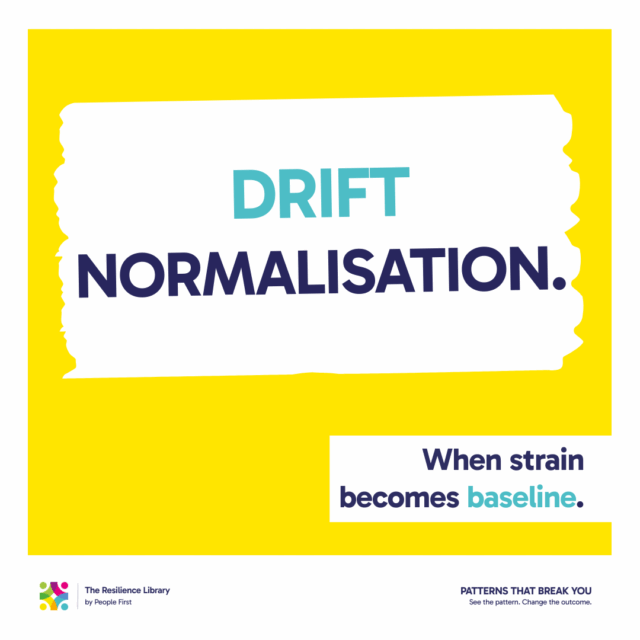
This article explores how drift normalisation affects school culture under pressure. Pressure in schools does not always arrive with visible disruption. Often, it accumulates slowly through drift. A reporting process becomes slightly more detailed. A staff briefing grows by ten minutes each week. An initiative intended as temporary quietly extends into the following term. Each individual change feels manageable. Collectively, they reshape the baseline.
Drift normalisation is particularly challenging because it does not trigger alarm. Staff adapt. Leaders adjust. Energy dips slightly, but performance remains steady. Over time, however, strain becomes embedded as the new normal.
In coaching sessions, this often surfaces as a vague sense of fatigue. Leaders cannot point to a single crisis, yet they feel mentally heavier than they did a year ago. Middle leaders describe juggling more conversations, more monitoring, more micro-decisions. Teachers talk about evenings that feel increasingly full, even though “nothing major” has changed.
What has changed is baseline expectation.
Resilient cultures are not those that eliminate pressure entirely. They are those that deliberately monitor for drift. They revisit processes that have expanded. They question whether every standing meeting still serves its purpose. They remove before they add.
When strain becomes baseline, wellbeing initiatives alone will not resolve it. Structural clarity will.
Stability under pressure requires leaders to pause periodically and ask: What has quietly grown? What are we still doing because we always have? What would we redesign if we were starting from scratch?
The answers to those questions shape culture far more than any one wellbeing strategy.